Showing posts with label Heather Linkenheimer. Show all posts

Monday, October 13, 2014

Virasana Offers Challenges for All Students


A seated pose that requires flexibility in the knees and quads, virasana, or hero pose, doesn’t look like it would be all that difficult upon first glance. To enter this unassuming pose, begin by kneeling with the knees gently touching. In this position, the shins and the tops of the feet are flat against the mat and the feet are hip-width distance apart. With the hands, roll the calf muscles outwards and then slowly begin to lower down, settling the buttocks between the ankles.

Beginners and less-flexible individuals (or those suffering from knee or ankle injuries) can support this pose by placing a blanket or block beneath the tailbone. From this upright version of virasana, students can introduce gentle arm and shoulder stretches. Those seeking a deeper sensation can begin working toward supta, or reclined virasana. Once the buttocks reach the floor, if the knees don’t reveal any major strain, students can lower backwards onto the elbows before relaxing completely onto the floor. More advanced students can add an additional challenge by raising the arms above the head rather than leaving them beside the body.

Wednesday, October 8, 2014

What is Swedish Massage?


Swedish massage, the most well-known kind of massage in the Western world, is, for most people, a good introduction to the world of massage therapy. The technique addresses the whole body with the goal of relaxing its joints and muscles. A Swedish massage therapist may alternate kneading, vibr
ation, tapping, long strokes, and deep circular movements as he or she works.

As a tradition, Swedish massage grew out of Western physiology and anatomy, rather than the energy-based traditions used in some types of Asian massage. Swedish massages usually last an hour or so, but longer sessions can allow the therapist to achieve better results.

During the massage, the therapist will typically begin by spreading oil on the skin and then use a series of strokes to warm up the muscles and break up knots or adhesions of other tissue. Massage therapists will ask about injuries or other conditions that may affect the massage, and patients can tell their therapists about preferences they have.

Tuesday, September 30, 2014

How Yoga Teaches Us to Be Kinder to Ourselves


In yoga, as in life, it's easy to start making comparisons. Not only do we compare ourselves to others, we also compare our performance on a given day to how we performed last week, last month, or last year. In some situations this can be a helpful and even necessary exercise, but when measuring our abilities in yoga, it quickly becomes detrimental. Although some people make the physical aspect of yoga the central focus of their practice, we can deepen our relationship with yoga and with ourselves if we instead approach yoga as a way to achieve mental, emotional, and spiritual growth.

Even a student who has been practicing yoga only for a short time has probably noticed that some days his body blesses him with great balance or deeper flexibility, and some days he just can't reach his toes no matter what. Rather than getting frustrated when your practice fluctuates, you can use these changes as opportunities to learn to accept your body and live in the present moment. Adopting this approach, rather than comparing yourself to previous classes or even other yogis, can help you cultivate a practice of being kinder to yourself, both in yoga and in everyday life.

Monday, September 22, 2014

How Seniors Can Enhance Their Well-Being through Yoga


An increasing number of older adults are discovering the numerous benefits—both physical and emotional—of practicing yoga. The nonprofit group Yoga Across America is one organization focused on bringing the discipline to people of all ages and backgrounds, with classes held in senior living facilities, recreation centers, public parks, and other venues.

For seniors, yoga can enhance flexibility, muscle tone, bone strength, and stamina. It can alleviate minor aches and pains and the effects of some of the physical conditions associated with aging. In addition, yoga has the potential to calm and focus the mind and to help restore mental agility. It can even take the edge off the discomforts associated with menopause. Because yoga promotes a positive mental attitude, it can also help seniors navigate some of the stressful situations of today’s fast-paced world.

Yoga has earned its reputation as a safe, individually paced practice. An older beginner should search out local classes that offer a gentle introduction, rather than jumping into an intense hot yoga workout. Many classes are specifically designed to meet the needs of senior adults, who may have to deal with some initial physical hurdles, such as tightened hamstrings or mobility issues. A gentle hatha yoga practice can be an excellent introduction. A class focused on the Iyengar style, with its use of props to accommodate special physical and structural needs, may also be a good fit. In any practice, an experienced instructor should be able to guide older beginners through a series of poses and practices that take the students individual needs into account.                          

Monday, September 15, 2014

The Role of Yoga in the Treatment of PTSD

A group study conducted in 2009 under the auspices of Major Jon Greuel involved 70 military personnel stationed in Kirkuk, Iraq. Using randomized experimental and control groups, the study looked at the impact of hatha yoga on the symptoms of combat stress in deployed members of the military. The study concluded that hatha yoga significantly reduced anxiety when compared to the control group. The yoga practitioners experienced less irritability, had more of a desire to socialize, and struggled less with concentrating and performing daily tasks. At the same time, they slept better, attended to their self-care more readily, and demonstrated improvements in mood.

Participants who regularly practiced yoga had the opportunity to share feedback about the experience. Many felt calmer and more relaxed and more than half reported an improvement in sleep patterns. More than a quarter of yoga practitioners noted other physical benefits.

This study shows the significant promise of yoga as part of a treatment plan for people struggling with post-traumatic stress disorder (PTSD). While more research needs to be done on the direct link between yoga and the treatment of PTSD symptoms, yoga holds a great deal of promise as a real option for veterans and other people with PTSD.                            

Monday, September 8, 2014

Yoga Helps Adolescents Build Coping Skills

In today’s world, virtually all adolescents live with stress, whether from school, family, friends, or their living environment. Even small children often have a large amount of stress in their lives. Unfortunately, many children do not have the tools necessary to deal with stress in an effective manner. This inability to process stress could manifest in inappropriate, violent outbursts or steer children toward the use of drugs and alcohol. In Parker, Colorado, a yoga instructor has envisioned a different scenario. She sees yoga as a primary way of teaching coping skills. Through yoga, these children learn how to develop their sense of inner peace and discover the value of creating and maintaining quiet time devoted only to themselves.

In addition to learning how to manage stress in the present, yoga can teach children and adolescents a number of valuable lessons that they can apply in various other parts of their lives as they grow older. Through yoga, individuals can learn how to let go of stress and channel it into something productive.

On a more practical level, yoga instruction helps children and adolescents perform better at sports and avoid certain injuries because of greater flexibility.                            

Tuesday, September 2, 2014

Is There a Link Between Meditation and Joyful Laughter?


A recent study conducted by researchers at Loma Linda University suggested that joyful laughter, caused by humor, elicits brain-wave frequencies that are similar to those seen in people while they meditate. The study involved 31 individuals who watched 10-minute video clips while attached to an EEG monitor, which measures brain-wave frequency densities. The videos had humorous, spiritual, or distressing tones.

When participants saw humorous videos, their brains produced high-amplitude gamma-band oscillations. Gamma frequencies are the only type of frequency found in every part of the brain, which means that humor engages the entire brain. Researchers have found similar gamma frequency patterns in people who meditate. This finding may fuel further inquiries into exactly how meditation and joyful laughter produce therapeutic effects on a biological level. Previous studies have linked laughter with lower blood pressure, better immune function, and decreased stress.

While watching spiritual videos, participants’ brains produced alpha brain bands similar to those found in individuals at rest. Distressing videos resulted in flat brain waves, which are most commonly seen in individuals who are detached or anxious.

Friday, August 22, 2014

Why Expectant Mothers Should Consider Regular Yoga Practice

Several studies have emerged on the benefits of yoga practice for expectant mothers. These studies show how yoga reduces labor pain and delivery time while preventing pregnancy complications and promoting mental health. About 10 percent of women experience mental health problems during pregnancy that can increase the risk of delivery problems and low birth weight. By combating stress, anxiety, and depression, yoga helps reduce the risks caused by mental health issues.

A randomized study published in Preventive Medicine found that yoga prevented complications in high-risk pregnancies. In the study, which involved one hour of prenatal yoga three times weekly, participants experienced significantly fewer complications than women in the control group. Another benefit, according to the study, was the reduction of pregnancy-induced hypertension and gestational diabetes.

Thai researchers conducted a study on the relationship between prenatal yoga and pain. The study, published in Complementary Therapies in Clinical Practice, found that women who practiced yoga in six one-hour sessions experienced reduced pain during labor and after birth, as compared to the control group. Additionally, the yoga group had a shorter average total labor time, especially in the first stage.

Monday, August 18, 2014

How to Maximize the Relaxation from a Massage Therapy Session

Most people do not receive massages on a daily basis. For that reason, they should treat the massage as a special occasion and take steps to maximize the feeling of relaxation that the massage provides. On the day of the massage, individuals should avoid distractions that could spoil their mood or introduce new stresses, such as e-mail, computers, and smartphones. If possible, they should free their day of other appointments and schedule the massage for a time when they can escape work and other stressful activities.

Some people may want to nap after a massage, which is actually a great way of complementing massage’s therapeutic effects, as sleep allows the body to recharge. Experts often recommend a 30-minute nap following a massage for the full rejuvenating benefits of sleep, but individuals can sleep for longer if they wish.

Massage therapists often recommend drinking water following a session. By helping the kidneys eliminate waste products more efficiently, water facilitates the removal of toxins released by the body during a massage.                            

Wednesday, August 13, 2014

Yoga Linked to Reductions in Blood Pressure


In recent years, researchers have become more interested in testing the effects of yoga on various medical conditions through randomized controlled trials. Studies have shown that yoga may be a useful tool in treating irregular heart rhythms, post-traumatic stress disorder, and several other conditions. Additionally, a review conducted at the University of Duisburg-Essen by the Faculty of Medicine found that yoga might prove very beneficial for individuals with hypertension.

The team published its finding in the American Journal of Hypertension. The review looked at seven previous studies and concluded that practicing yoga reduced both systolic and diastolic blood pressure in people with elevated blood pressure by a significant amount. Individuals with higher blood pressure realized greater benefits from yoga practice.

The seven studies approached their definitions of yoga differently and examined a variety of styles and techniques. Some of the studies focused more on yogic breathing than a physical practice. Thus, drawing concrete conclusions will require more research and large trials designed according to modern standards in biomedical research.

Individuals who attempt yoga for medical reasons should always consult with a physician and find a qualified instructor.                            

Friday, August 8, 2014

The Role of Yoga in the Daily Lives of Athletes


Yoga continues to increase in popularity throughout the United States among various populations, including athletes. Valorie Kondos-Field, a gymnastics coach at the University of California, Los Angeles, has identified yoga as one of the primary means of maintaining health for student-athletes under great physical and mental stress. Additionally, University of Utah coach Kyle Whittingham has cited yoga as a major means of relieving the pressure of the sport. Teams like the Utah Jazz and Philadelphia Eagles have employed yoga instructors, and sports stars like LeBron James and Vernon Davis to speak openly about the adoption of yoga as part of their regimen.

Many athletes have such a demanding schedule that they have little time to relax. Yoga forces them to slow down and pay attention to their bodies, which can significantly aid in the restorative process. Many athletes have also recognized the benefits of Bikram, also known as “hot” yoga, which individuals perform in a room set at about 105 degrees. The high temperature not only helps to loosen the muscles and mitigate soreness after games and practices, but also offers a mental challenge that many athletes enjoy.                            

Tuesday, July 1, 2014

The Origins of Vipassana Meditation Practice


The oldest form of Buddhist meditation, Vipassana derives from the Satipatthana Sutta, an ancient text that is traditionally attributed to Shakyamuni. Through Vipassana, practitioners cultivate mindfulness, an abiding awareness of the present. Students spend years practicing this form of meditation, during which time they generally examine various aspects of their existence, such as their hardwired reactions and emotional sensitivities. Ideally, practitioners become more receptive to the basic experiences of life and begin to pay attention to their thoughts and feelings without becoming lost in them.

Mindfulness leads to a greater understanding of the self. Individuals project an ego image. Through mindfulness, they begin to realize who they really are beneath that projected image.

At its heart, Vipassana meditation teaches individuals how to fully pay attention without any divided attention. While this may sound simple, it is far from easy. In reality, people pay very little attention to daily experiences. Instead, they devote their attention to reminiscing about the past or planning for the future. Without focused energy, people rarely pay complete attention to the present.

Wednesday, June 25, 2014

Why a Number of Executives Are Turning to Meditation


Billionaires like Paul Tudor Jones, Ray Dalio, and Daniel Loeb start their days by sitting on a meditation cushion. In fact, a number of the most successful executives on Wall Street and beyond have embraced meditation. Ray Dalio, who has practiced meditation for more than 40 years, attributes much of his success to the discipline. Just as exercise trains his body, he explains, meditation trains his mind and prepares him to make the best business decisions possible.

Bloomberg reports that meditation classes at Goldman Sachs have waiting lists with hundreds of names. Today, many budding business professionals see meditation as a competitive edge that is integral to their future success.

Much of meditation’s popularity derives from recent studies published on how meditation actually affects the brain and body. A study from the
International College in Thailand released this year showed that people who meditate better cope with job-related stress and experience lower rates of burnout. Similarly, a study from the University of Amsterdam connected meditation practice to improved creative performance and greater attention to detail.

Tuesday, June 10, 2014

The Growing Role of Mindfulness Meditation in Sports Medicine


In recent years, mindfulness meditation and its role in physical fitness has become a hot topic among sports medicine experts. Living in the present remains a critical aspect of an athlete’s focus and peak performance. Since meditation develops this skill, an increasing number of athletes are discovering the benefits of this practice.

A study recently appeared in Psychological Science that demonstrated the efficacy of 15 minutes of focused breathing and meditation in helping athletes make better choices while performing.

Beyond the sports field, meditation may even help individuals exercise more effectively. Athletes and non-athletes alike often avoid exercise because they feel that it is boring. By learning how to focus on the present, exercisers gain the ability to overcome boredom and pay closer attention to their bodies as they exercise.

Jessica Matthews, a fitness consultant to the American Council on Exercise, has explained how exercise may reduce stress, but finding time to work out can actually increase stress. Meditation helps people focus on the present and increase productivity. Instead of wasting time planning for the future or remembering the past, individuals can concentrate on the task at hand and more effectively manage time. As a result, meditation may help individuals exercise more regularly and effectively.

Monday, May 19, 2014

Get the Most Out of Your Half Moon Pose


A challenging pose, “ardha chandrasana,” or half moon, tests balance, strength, and patience. If you are just starting to incorporate this pose into your practice, consider this advice:

Think of the process as an “unfurling.” Enter the pose by first grounding in the forward foot and gently kicking the back foot up as you lean forward. If your right foot is forward, place your right finger tips on the ground or on a block and bring your left hand to your left hip. Once you have your balance here, slowly begin the unfurling process by opening the left hip and side body to the left. If you’re still stable here, raise the left hand toward the sky, balance again, and then lift the gaze.

Be kind to yourself. Even some yogis who have been practicing half moon for years can’t tilt right into half moon with their arm raised and their eyes looking skyward. As you move through the “unfurling” process, be patient with yourself, especially if your balance is not on par with an earlier practice; instead, simply accept where you are and soak up the strengthening and clarifying benefits of this pose.

Channel your energy. No matter where you are in your half moon practice, you can appreciate the beautiful feeling of suspension that this pose provides. Visualize drawing energy up through the roots of your grounded foot and fingers. Eventually, as you’re able to lift the hand and the gaze, you can send that energy skyward, allowing your body to serve as an energy rod.

Monday, April 28, 2014

Two Habits to Make Your Yoga Practice More Fulfilling


Many Americans practice yoga as a form of exercise; however, yoga encompasses so much more than great abs and superior flexibility. Looking into yogic philosophy, we learn that yoga evolved as a way to cultivate a union or oneness with the world around us. Some yogic scriptures also recognize yoga as a path to bliss. Whether your next yoga class is more spiritual or it’s a boot camp class filled with yogic push-ups, consider incorporating these two habits into your practice.

Develop an intention. Many yoga teachers start class by inviting students to choose an intention, such as peace, love, or balance. The intention serves as a personal theme to which students can devote energy and compassion. Students can also think of an intention as a sort of prayer for themselves, their loved ones, or the world at large. Integrating an intention into your practice will help you calm your mind and connect more deeply with yourself and others.

Focus in on gratitude. The next time you’re in chair pose and your thighs start burning, consider adopting a more grateful mindset. Be grateful that your legs are strong enough to hold you in this uncomfortable pose; be grateful that you showed up to care for your body through yoga. Once you start turning the challenges in your yoga class into opportunities for gratitude, it quickly becomes easier to incorporate gratitude into your daily life.

Wednesday, April 23, 2014

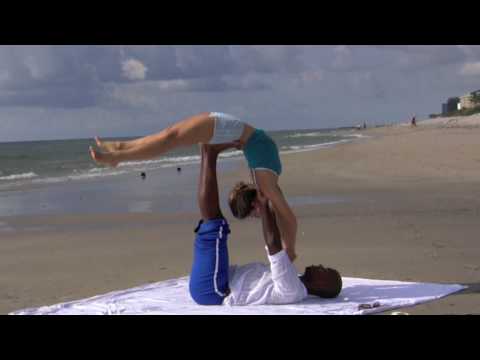
Yoga Can Bring Couples Together


Forget a movie and popcorn: An evening—or an afternoon—spent doing yoga together can make for a great date while keeping both of you fit and healthy. More and more yoga studios are offering couples programs, and not only for romantic pairs, but for parents and children, friends, and workout partners. In many of these programs, prior knowledge of yoga is not even necessary.

However, for romantic partners in particular, yoga can offer a distinctive bonding experience. The focus is on communication, letting your partner know how the various bends and stretches feel, and on remaining aware of and sensitive to one another’s needs and limits.

If you’re both already seasoned practitioners, here are a few ideas to try next time you want to charge up both your fitness routine and your personal connection:

One of you assumes the downward dog posture, traditionally called the adho mukha svanasana. Then the other partner positions his or her feet on the outsides of the first partner’s hands and lowers to rest flat along the first partner’s back, with arms stretched back over the head. Hold the position for a few breaths, and then switch places.

Alternatively, try sitting on the floor back-to-back in a cross-legged pose. Each person stretches back to put his or her right hand on the partner’s left thigh slightly above the knee. Then both partners position their left hands on top of their own right knees. Synchronize your breathing, and try to lengthen and extend the stretch while inhaling, then to increase the amount of the twist while exhaling the breath. Go from one side to the other in this way until you are both limber and energized.

When two people have to work together to achieve correct alignment and optimum stretch, cooperation takes precedence, thus bringing them closer together physically and emotionally.